 iPhone · iPad
A magical world to explore
Where every word becomes an adventure
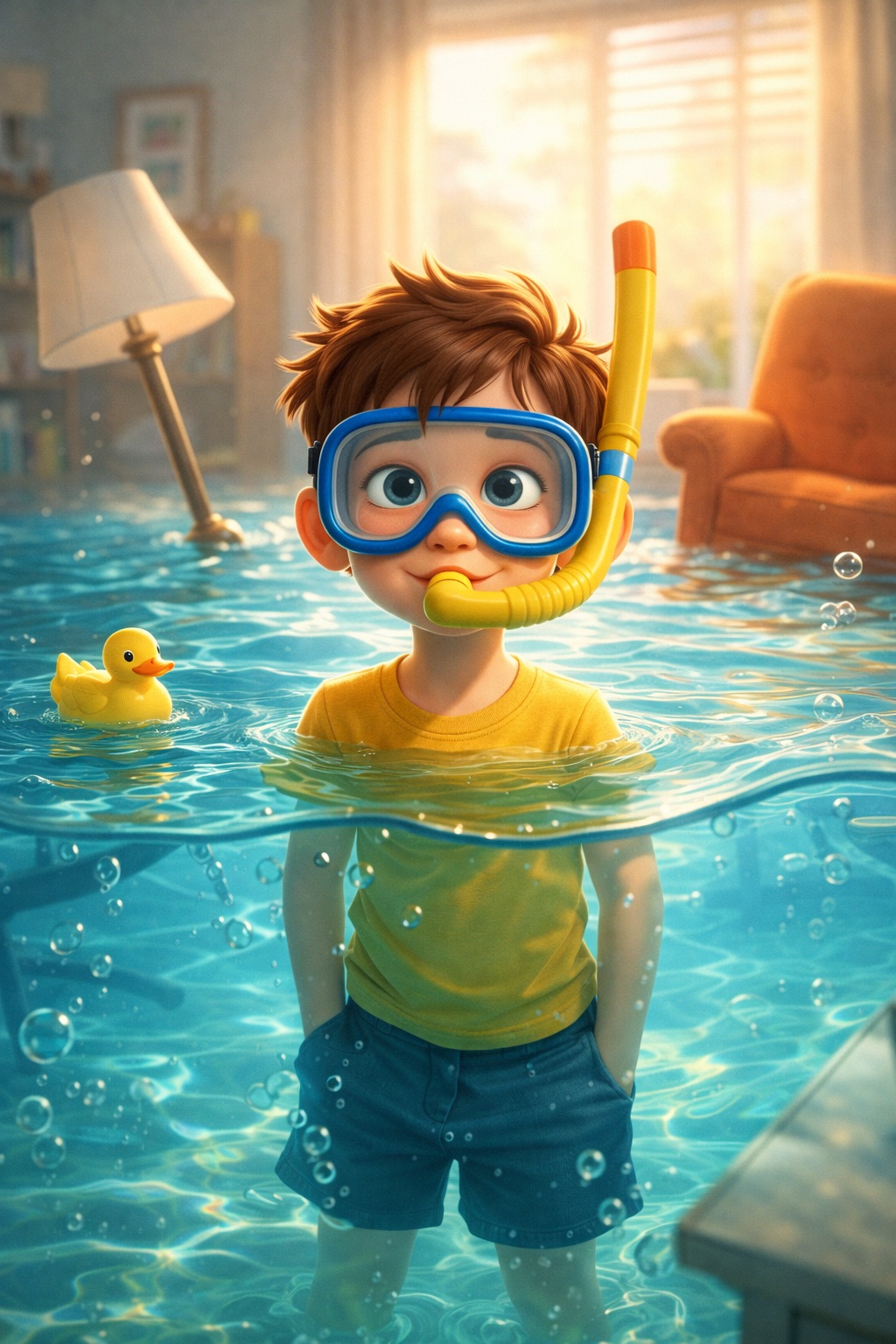
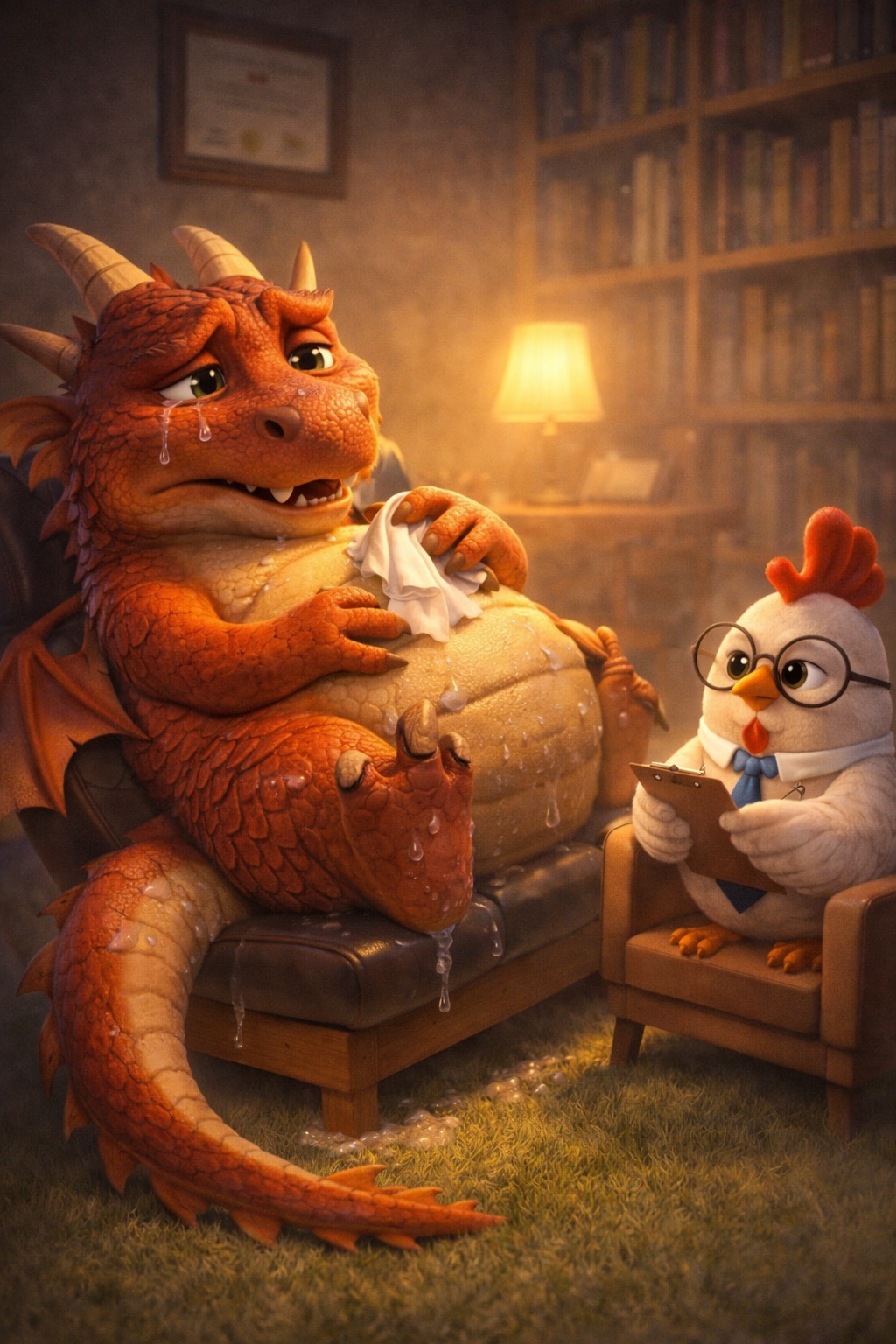
Each flashcard opens a window into a bright, beautifully illustrated world — from monarch butterflies to brave little snowmen. Children don't just memorize. They imagine, explore, and remember.

















Inside the app
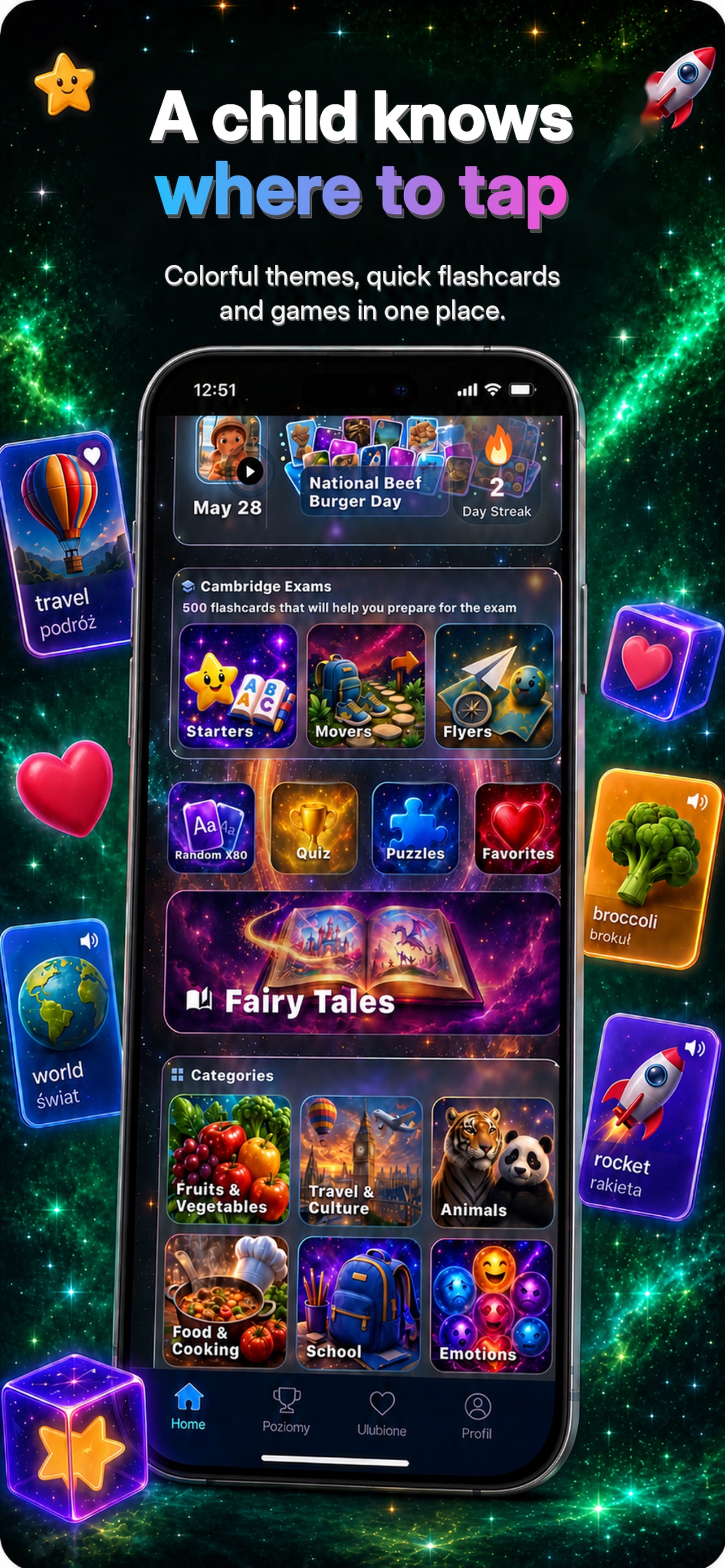
Made for tiny hands & curious minds
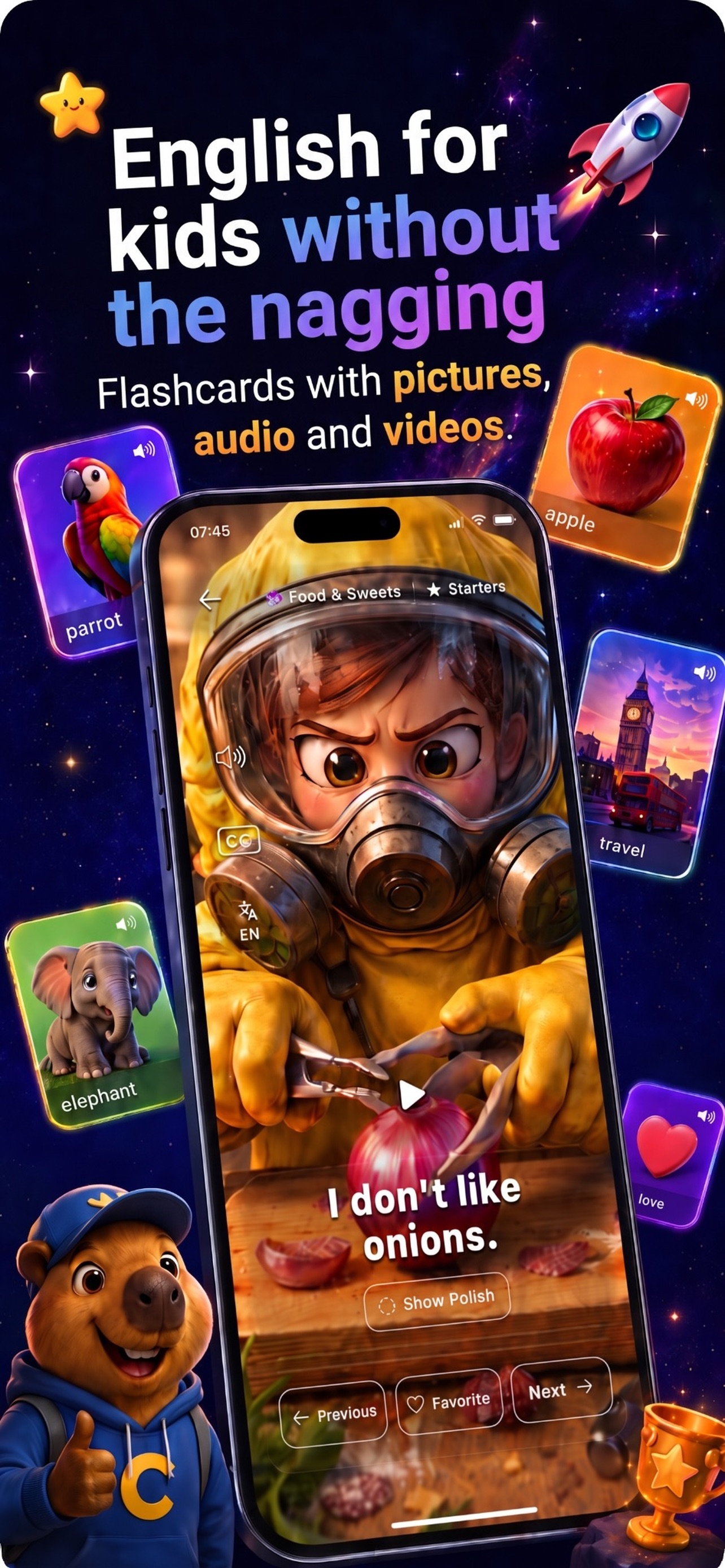
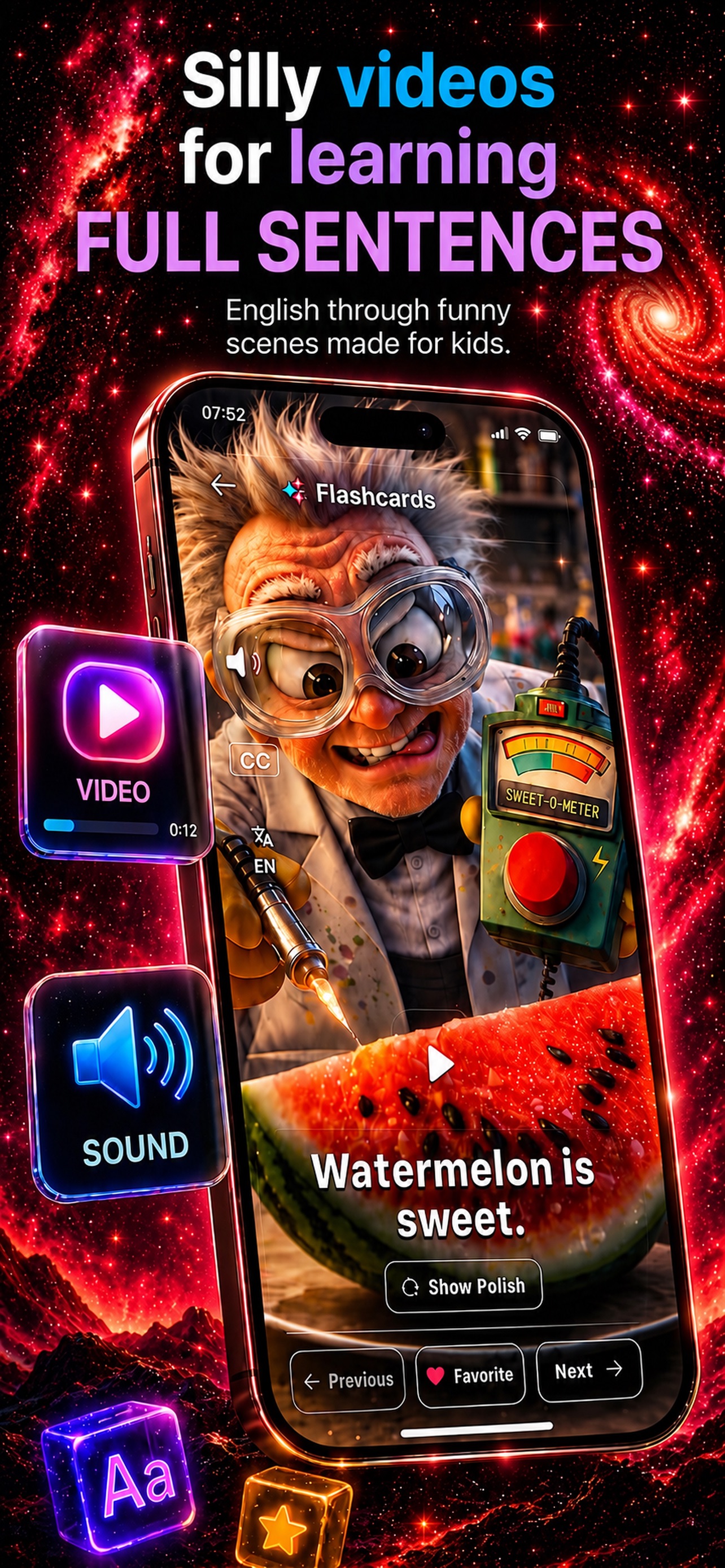
Big tap targets, gentle pacing, zero distractions — built so even the youngest learners can dive in by themselves.
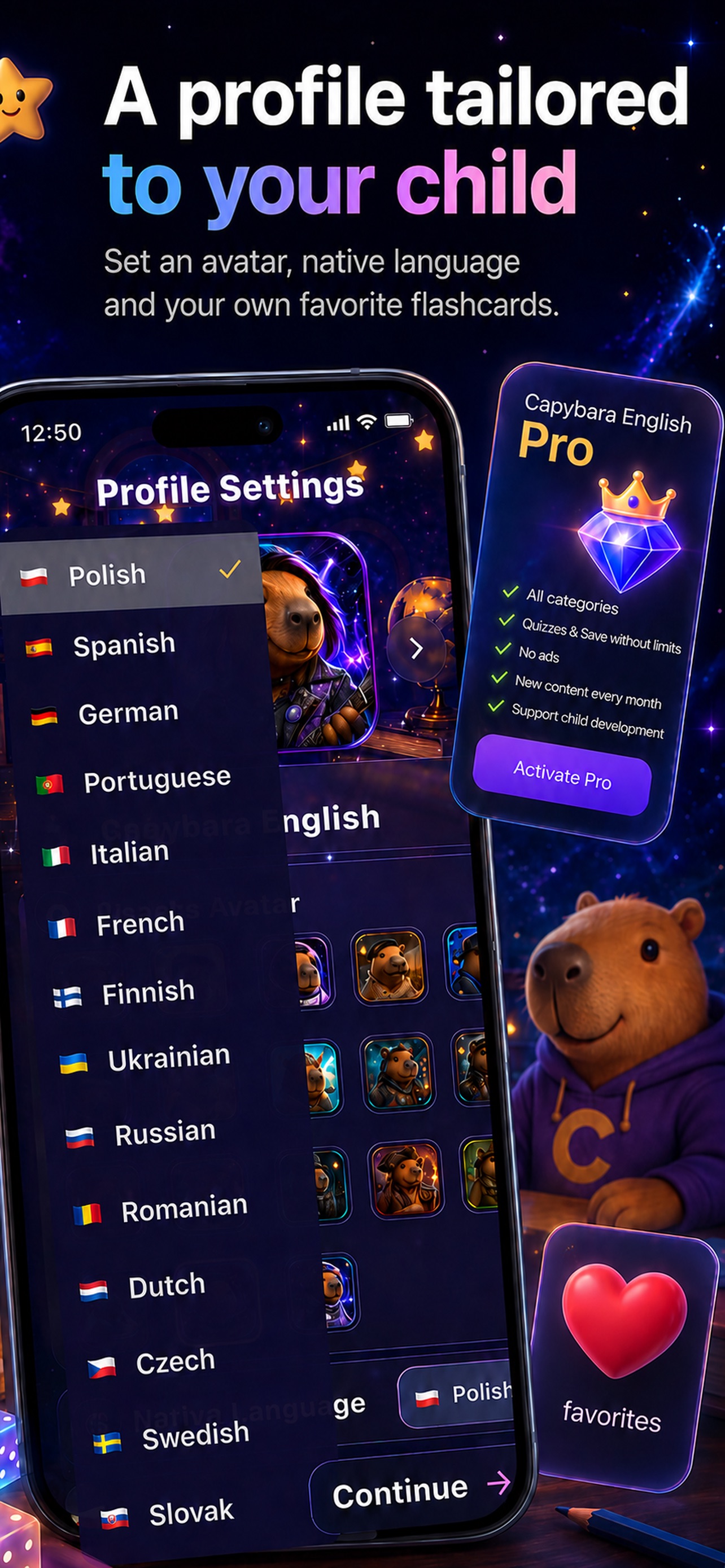
Designed for joyful learning
Why kids love it
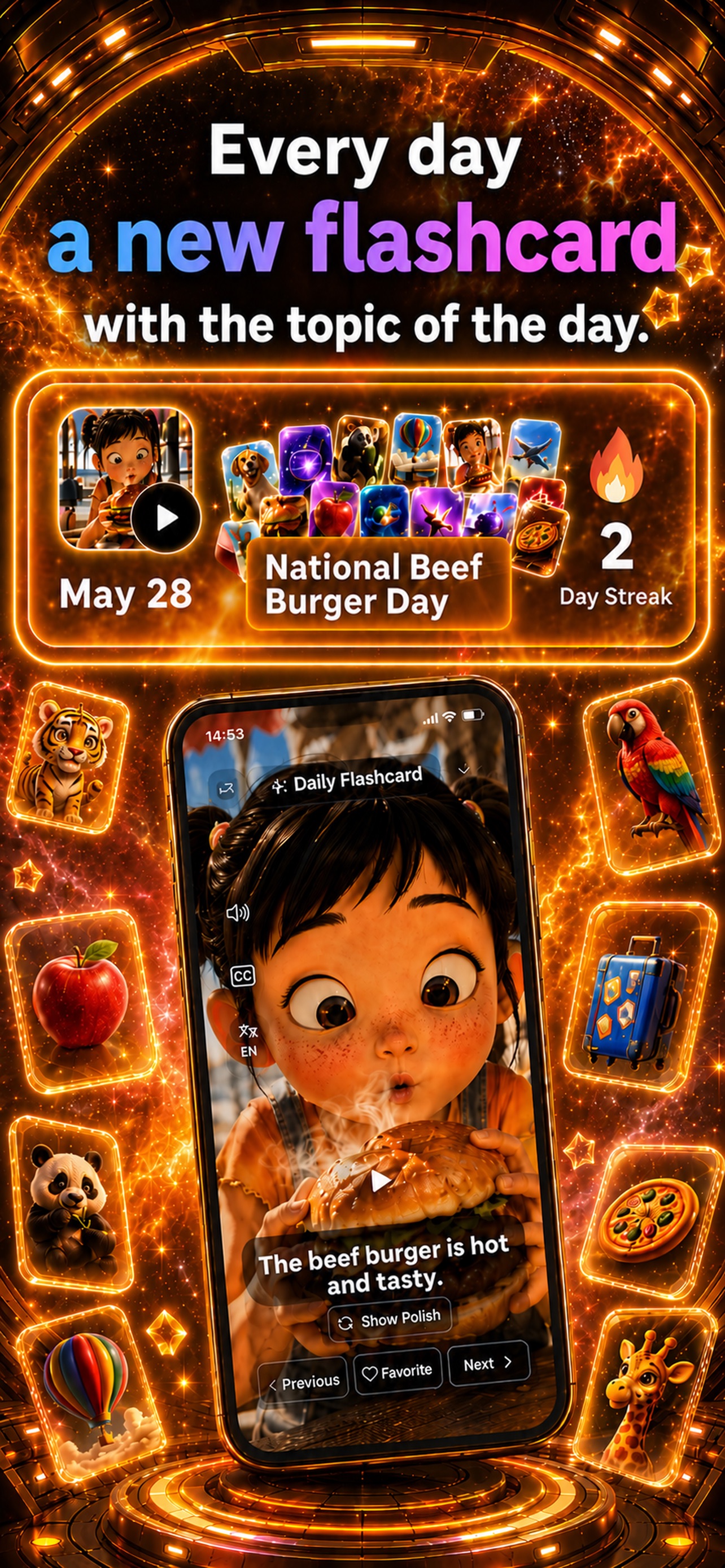
Video Flashcards
Engaging short videos help children understand words in context, making learning memorable and fun.
Audio Pronunciation
Clear pronunciation models help children hear each English word before repeating it in their own time.
Visual Learning
Bright, clear images and an intuitive design make it easy for children to navigate and learn independently.
How it works
English vocabulary practice in three small steps
Capybara English combines visual flashcards, clear audio, short funny videos and active recall so children can meet a word, understand it and bring it back.
Choose a useful topic
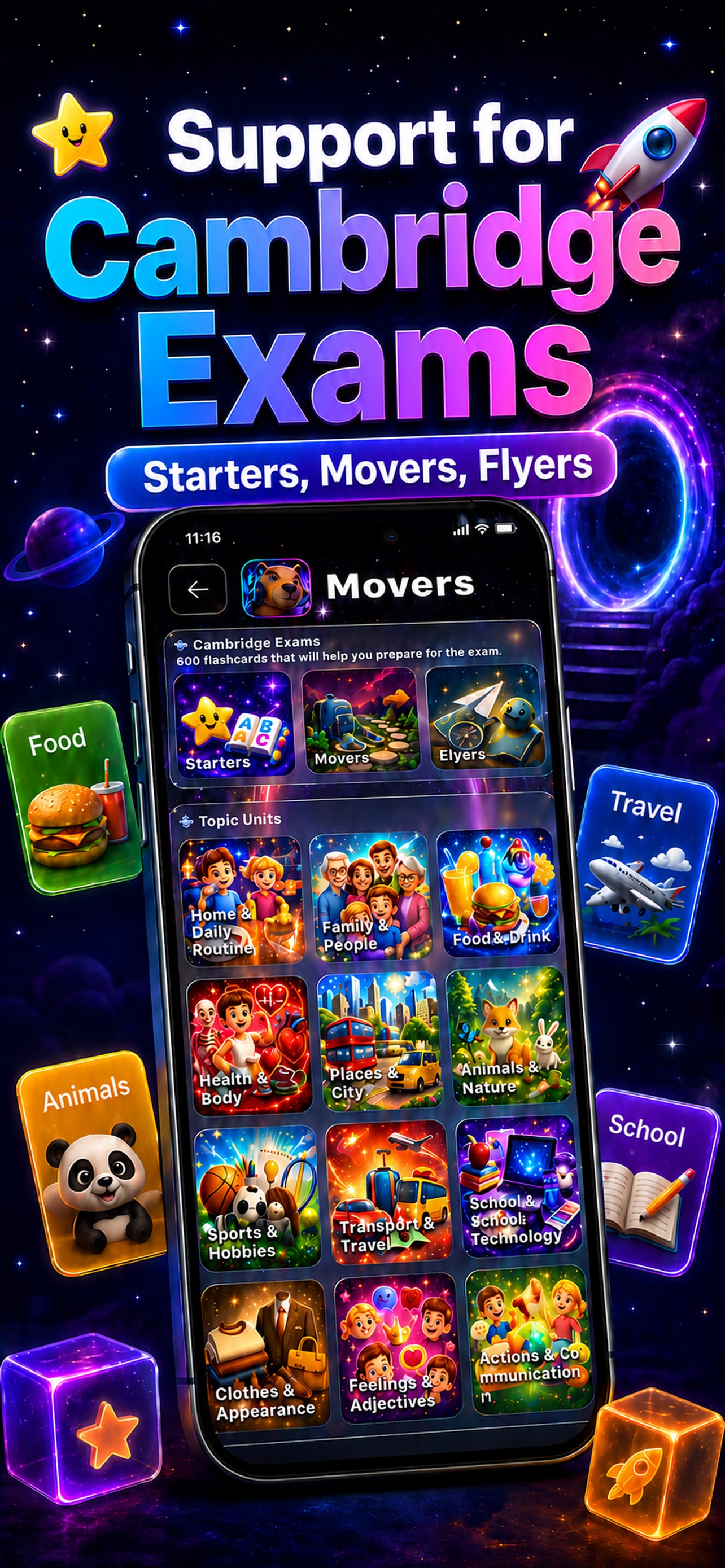
Start with animals, food, school, emotions, clothes or travel, or choose vocabulary practice organised around Starters, Movers and Flyers.
See it, hear it, watch it
A picture shows the meaning, audio models the English pronunciation and a short silly video places the word inside a memorable sentence.
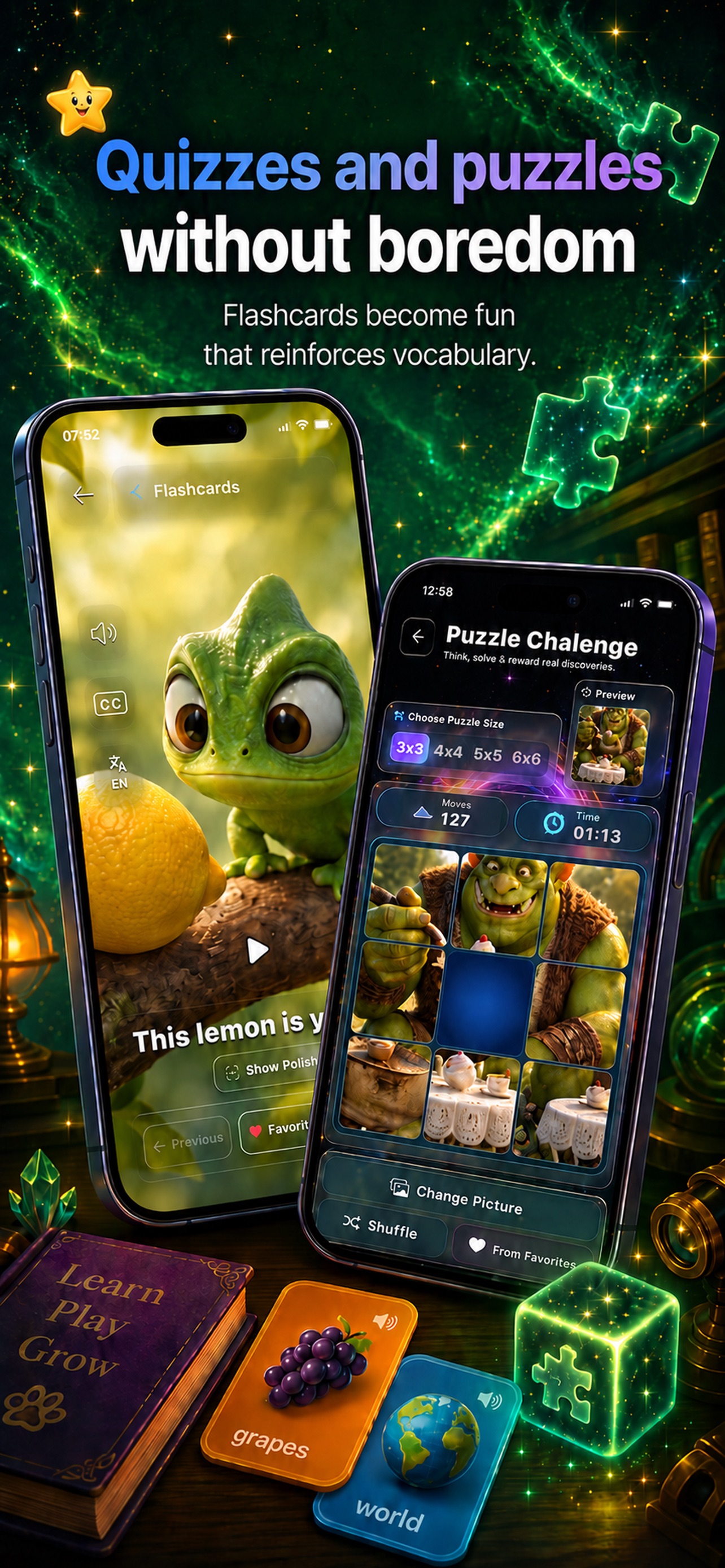
Recall it through play
Quizzes and picture puzzles turn watching into a decision. Revisit favourite flashcards and use the same word again in another short session.
Practical guides for parents
Help your child learn English step by step
Start with the question you have today. Every guide gives a practical answer first, then shows how pictures, audio, videos, quizzes and puzzles can support the routine.
Best English learning app for kids
A parent’s checklist for age fit, active practice, audio, privacy, pricing and useful content.
Read the app checklist →English vocabulary games for kids
Picture, listening, spelling and quiz ideas that turn a small word set into varied practice.
Try the vocabulary games →Flashcards with pictures and audio
Use a simple picture, sound, recall and review method instead of passive card swiping.
Learn the flashcard method →How to teach kids English at home
Build a short look, listen, play and review routine—even if you are not fluent in English.
Build an at-home routine →English learning for preschoolers
Introduce first words through concrete pictures, clear sounds, movement and tiny playful sessions.
Start preschool English gently →English pronunciation for kids
Use clear audio, short sentences and pressure-free repetition to help children hear new words.
Practise listen and repeat →Pre A1 Starters vocabulary practice
Support a new learner with familiar topics, picture recognition, listening and simple recall.
Open the Starters guide →A1 Movers vocabulary practice
Move from isolated words towards short phrases, useful contexts and mixed topic review.
Open the Movers guide →A2 Flyers vocabulary practice
Broaden vocabulary through context, listening, focused review and mixed recall activities.
Open the Flyers guide →Montessori-inspired English learning
Use clear choices, concrete visuals and independent repetition in a thoughtful home routine.
Explore the approach →Questions parents ask
English learning for kids: quick answers
Open any question for a concise answer, then follow the guide link when you want the full routine.
What is the best English learning app for kids?
Look for age-appropriate navigation, clear pictures and audio, active recall, useful topics, transparent pricing and a routine your child will willingly repeat. Learn more in the parent’s app checklist →
Do English flashcards help children learn vocabulary?
They can help when children connect a word with a picture and sound, then retrieve it in a quiz, puzzle or real-life activity instead of only swiping. Learn more about picture and audio flashcards →
Which English vocabulary games work best for kids?
Picture matching, listening choices, spelling puzzles and quick quizzes work well when they use a small familiar word set and give the child time to think. Learn more with practical vocabulary game ideas →
How can I teach my child English at home?
Choose one small topic, look and listen together, recall a few words, then finish with a playful review. Short repeatable sessions are easier to sustain than long lessons. Learn more in the at-home English routine →
What vocabulary does a child need for Pre A1 Starters?
Pre A1 Starters focuses on simple language around familiar everyday topics. Use the current official word list for scope and picture, audio and recall practice for review. Learn more in the Pre A1 Starters guide →
How should children practise A1 Movers vocabulary?
Combine picture recognition with listening, short phrases and recall across several topics, revisiting difficult words in different activities. Learn more in the A1 Movers vocabulary guide →
How can a child prepare vocabulary for A2 Flyers?
Broaden the topic mix, practise words in short contexts and alternate focused review with mixed listening, quiz and recall activities. Learn more in the A2 Flyers vocabulary guide →
What does Montessori-inspired English learning mean?
At home it can mean clear choices, concrete visual material, independent repetition and an adult who guides without taking over the activity. Learn more about a Montessori-inspired routine →
How can children improve English pronunciation at home?
Let the child hear one clear word or short sentence, watch its meaning, repeat without pressure and hear it again in a later session. Learn more in the pronunciation guide →
What is a good way to introduce English to a preschooler?
Begin with a few concrete words, pictures, sounds and actions in a short routine that ends while the child is still interested. Learn more in the preschool English guide →
Ready to start the adventure?
Free to download with optional in-app purchases. Available on iPad and iPhone.